

FAANG is slowly fading into the background. The new acronym you absolutely need to know is MANGO, which stands for Microsoft, Anthropic, Nvidia, Google, and OpenAI. These five powerhouses aren’t just creating apps or platforms anymore. They are designing and building the very brains that will shape the future. And to be perfectly honest, this isn’t simply a tech rivalry anymore.

It has evolved into a full-scale war for dominance over how we work, learn, create, and even think on a fundamental level. From cutting-edge chips to intelligent chatbots, from expansive cloud platforms to sophisticated autonomous agents, the MANGO companies are laying the essential groundwork for what will become an AI-first world. So what does this actually mean for you, the user? That’s exactly what we’re here to unpack and explore. No confusing jargon. No exaggerated hype. Just a straightforward, clear-eyed look at how each of these companies is playing the game, the strategies they’re employing, and what’s truly at stake for all of us moving forward.
Microsoft’s AI Domination Strategy
Microsoft isn’t aiming for flashiness; it’s aiming for ubiquity. And honestly, it’s succeeding. When I tested Copilot in Word and Excel last month, I was amazed. It didn’t just suggest edits, it rewrote entire paragraphs in my voice. It didn’t just analyze numbers, it just explained trends like a seasoned data analyst.

Copilot is Microsoft’s stealth move. It’s seamlessly integrating AI into every facet of your digital world: Outlook, Teams, GitHub, Windows. You don’t “use AI”, you simply get things done faster. Behind it all is Azure, Microsoft’s cloud powerhouse fueling OpenAI’s models, enterprise solutions, and its own AI ecosystem. It’s fast, scalable, and deeply embedded.
Let’s not overlook the OpenAI partnership. Microsoft didn’t just invest, it strategically absorbed OpenAI’s advanced capabilities. Early access to GPT-4, GPT-5, and beyond? That’s a huge competitive advantage.
The truth is, Microsoft isn’t chasing consumer buzz, they’re building the AI infrastructure for the workplace, where the real value lies. They’re also committed to responsible AI. I’ve reviewed their Responsible AI Standard, and while it’s not flawless, it’s among the most thoughtful frameworks out there. They’re embedding ethics into the code itself, not just using it as a PR gesture.
You May Like


Anthropic: Pioneering Ethical AI Development
Everyone constantly talks about speed and scale in AI development, but Anthropic takes a different approach by focusing primarily on safety, and I deeply respect that commitment. Their flagship model, Claude, doesn’t simply provide answers to questions, it operates according to a clearly defined constitution. Literally, it is trained to self-correct and adjust its responses based on a carefully crafted set of written ethical and operational principles. That level of intentional design is truly remarkable.
I have personally used Claude for highly sensitive and complex tasks such as drafting legal summaries, creating healthcare documents, and performing detailed financial analysis. It remains calm, dependable, and significantly less prone to hallucinations or erroneous outputs compared to many other AI models. That kind of reliability is crucial when the stakes are extremely high and accuracy is non-negotiable.
Anthropic is not trying to compete with ChatGPT in a popularity contest. Instead, their goal is to become the trusted AI partner in critical environments like courtrooms, hospitals, and government agencies. Honestly, that is a very important niche to own and cultivate. While their models are not open-source and their release schedule is slower than some competitors, their unwavering dedication to alignment, safety, and interpretability is truly refreshing in today’s AI landscape, which often prioritizes flashy demos and rapid rollouts.
Meanwhile, Anthropic has quietly secured several major enterprise deals, especially within the highly regulated finance and healthcare sectors. These achievements aren’t about viral hype, they represent thoughtful, strategic, and long-term plays that position them for sustained success.
NVIDIA: The Unseen Titan of AI Innovation
Let me be completely straightforward: Nvidia is the undisputed leader running this entire show. Whenever you hear about a new groundbreaking AI model, whether it’s GPT-5, Gemini Ultra, Claude 3, or any other cutting-edge system, guess what’s powering all of them? It’s Nvidia’s GPUs, specifically the high-performance H100 chips and now their latest Blackwell series.
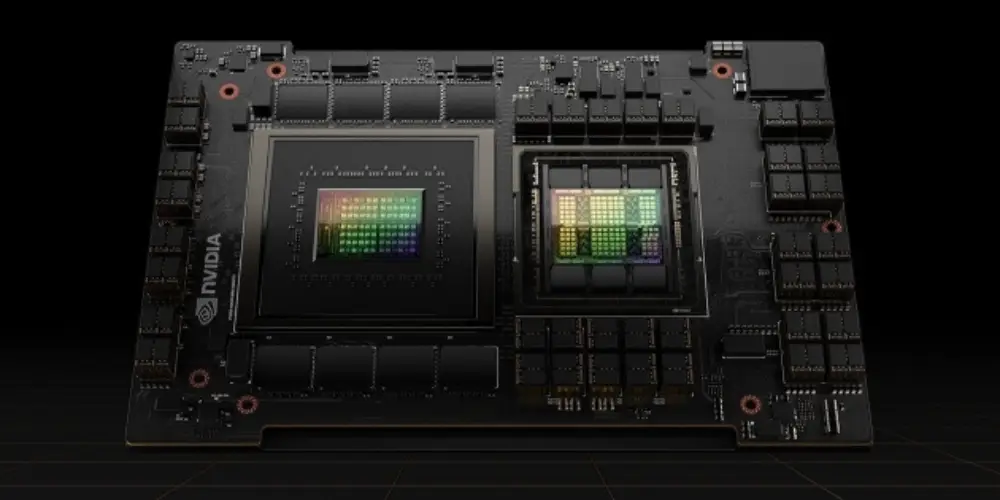
I’ve personally witnessed startups and established companies alike scrambling frantically just to secure access to Nvidia hardware. It’s comparable to trying to get tickets to a sold-out Taylor Swift concert, and the demand is absolutely off the charts. But Nvidia’s dominance isn’t just about having the best chips available. Their CUDA ecosystem is incredibly sticky, developers invest time to learn it, grow to love it, and then rarely make the switch to anything else. Plus, their DGX systems serve as plug-and-play supercomputers purpose-built for AI workloads, making deployment much easier for organizations.
On top of that, Nvidia offers Omniverse, a powerful simulation platform that goes far beyond gaming or metaverse applications. It’s now widely used for training robots, modelling entire cities, and running simulations to test autonomous vehicles in complex environments. Nvidia also holds a commanding position in edge AI through its Jetson modules, which power everything from drones and warehouse robots to intelligent cameras and smart sensors.
It might not be the flashiest or most glamorous aspect of AI, but it’s absolutely everywhere and crucial to operations. The bottom line is simple: Nvidia isn’t just building AI solutions itself. They are the ones building the essential power grid that AI relies on. Without Nvidia’s technology and infrastructure, the rest of the AI ecosystem, including companies like MANGO, would be left completely in the dark, unable to advance or function effectively.
Google: The Comeback Story of Google’s AI Revolution
Google had a challenging and somewhat rocky start with its AI initiatives. Bard was underwhelming and didn’t quite meet expectations. But now, with Gemini, things are looking like a strong comeback. I’ve been using Gemini integrated into Gmail, Docs, and Android devices. The improvements are subtle but genuinely smart. It helps by finishing my emails, providing concise meeting summaries, and even suggesting edits tailored to my unique writing style. While it’s not flawless yet, the pace at which it’s improving is impressive and promising.
What many people tend to overlook is Google’s incredible global reach. With billions of users interacting daily across Search, YouTube, Maps, and Android platforms, embedding AI deeply into these products could be a genuine game-changer. Additionally, DeepMind, Google’s pioneering research division, is quietly producing some of the most groundbreaking and innovative work in artificial intelligence today. Projects like AlphaFold, Gemini Ultra, and Alpha Geometry are not merely flashy demos, and they represent major scientific and technological breakthroughs that have vast implications.
Google is also aggressively advancing on-device AI capabilities. Pixel phones now run sophisticated models locally, which translates to faster response times, enhanced user privacy, and significantly reduced dependence on cloud computing. On top of that, Google is making substantial progress in enterprise AI with offerings like Vertex AI, Duet AI, and Model Garden. While these enterprise tools may not yet be as polished or seamless as Microsoft’s Copilot, they are rapidly evolving and closing the gap. Although I remain cautious and somewhat skeptical about Google’s ethics and privacy track record, from a purely technical standpoint, Google is undeniably back in the AI game with renewed vigour and momentum.
OpenAI: the Future of Innovation
OpenAI is the main reason why the entire world is now buzzing about artificial intelligence. ChatGPT was the initial spark that ignited widespread interest and excitement. Since then, they have been moving at an incredible pace, constantly pushing boundaries.
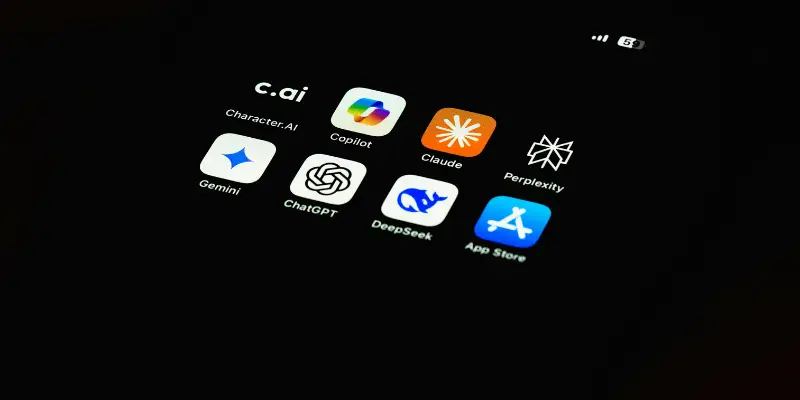
I personally use ChatGPT every single day for a variety of tasks: writing, coding, brainstorming new ideas, and even for therapy sessions (no judgment, please). It’s incredibly fast, highly adaptable, and often surprisingly insightful in its responses. However, there is a bit of tension here: OpenAI originally started as a nonprofit organization. Today, it operates as a capped-profit company with ambitious enterprise plans and closed-source models. This shift in mission and structure has caused some controversy and disappointment among certain observers.
Nevertheless, their research remains at the absolute cutting edge. Rumours suggest that GPT-5 will feature advanced capabilities like planning, memory, and tool usage. This goes beyond simple chat functionality to represent a form of agency.
OpenAI is also working on developing intelligent agent systems capable of booking travel, managing calendars, and analyzing complex data. Although these technologies are still in their early stages, the potential impact is enormous. Their strategic partnership with Microsoft provides them with vast scale and resources. Their strong brand inspires trust among users and partners alike. Their rapid pace of innovation fuels continuous momentum. But the question remains: is this level of growth and speed sustainable over the long term? I am uncertain. They are advancing very quickly, perhaps even too quickly in some respects. Additionally, they have introduced ChatGPT Team and Enterprise versions, which have proven to be genuinely useful tools. I’ve witnessed teams using these platforms to efficiently summarize meetings, draft detailed reports, and collaborate on writing code together.
The MANGO War: Which Side Will Triumph in the AI Battle?
- Smarter tools: AI is seamlessly integrated, becoming a natural part of everything.
- Privacy Showdown: Cloud Computing vs. Edge Computing Becomes the New Battleground.
- Job shifts: Automation is real. But so are new roles.
- Education Revolution: Personalized Learning Has Become a Reality.
- Governance gaps: Regulation is lagging. Risks are growing.
Conclusion: No Single Winner
Each MANGO company holds a distinct and specialized niche that sets it apart in the rapidly evolving AI landscape:
• Microsoft: The solid enterprise foundation that supports large-scale business solutions and drives corporate innovation
• Anthropic: The ethical compass and guide, focusing on responsible AI development and ensuring technology aligns with human values
• Nvidia: The technological powerhouse powering AI advancements with cutting-edge hardware and computing capabilities
• Google: The dominant consumer titan, integrating AI into everyday products used by billions worldwide
• OpenAI: The pioneering public innovator, pushing the boundaries of accessible AI research and groundbreaking applications
Together, these companies are collaboratively shaping and defining the very framework of an AI-first world and future that is exciting, complex, and filled with intriguing contradictions. I am fully committed to this journey, while remaining vigilant and observant of every development along the way.
What are your thoughts?
Which MANGO company do you trust the most?
Which one concerns you?
And what do you really want AI to do for you?
Share your ideas. Let’s have an honest conversation about the future—no hype, just truth.